Guide
How to read an old handwritten letter
Old letters are rarely unreadable; they are unfamiliar. The writer’s hand, spelling and shorthand follow rules you can learn from the letter itself. This is a method you can use with a pencil or alongside a tool, one pass at a time.
1. Start with the best image you can get
Most “unreadable” letters are badly lit photographs. Lay the page flat in soft daylight, fill the frame with the whole page, and keep the phone parallel to the paper. Photograph the back of each sheet and the envelope too: postmarks and return addresses often settle a date or a place.
Our guide to photographing and scanning letters covers lighting, resolution and page order in detail.
2. Read the whole letter once for context
Before you try any hard word, skim for the parts that are almost always present in a letter:
- The heading — a place and a date, usually top right.
- The greeting — “My dear Sister”, “Dear Folks”, “Liebe Marie!”. It tells you who is writing to whom.
- The sign-off — “Your affectionate brother”, often followed by a shortened first name.
- Familiar words — the, and, of, days of the week, months. They show you how this writer forms letters.
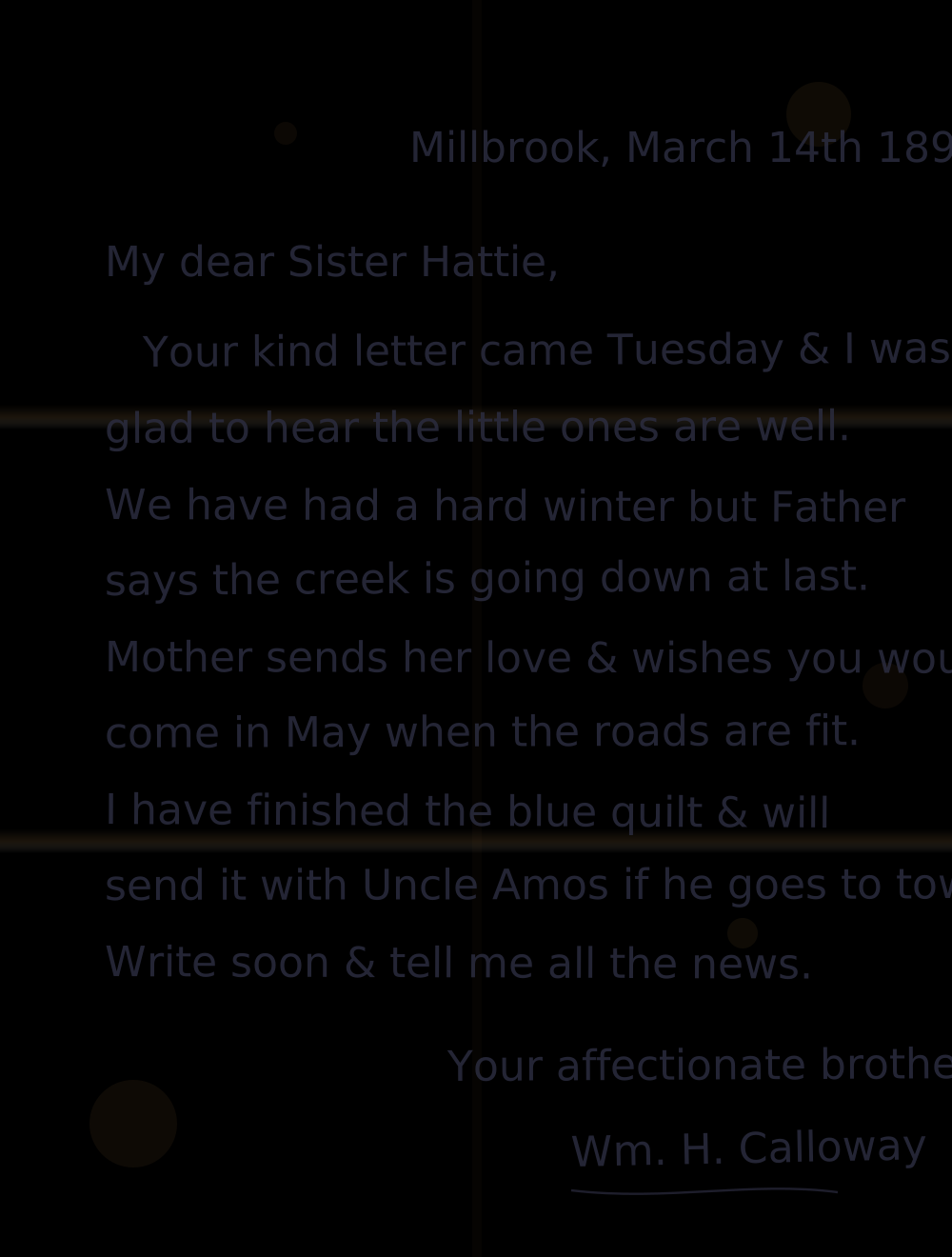
- Anchor words first. “letter”, “came” and “I was” are easy; they show how this writer makes e, t and w.
- Use those shapes. The same looped e and crossed t turn the next word into “Tuesday”.
- Keep the writer’s symbols. The sign after “Tuesday” is an ampersand. A faithful transcription keeps “&”; the modern version says “and”.
Transcription: Your kind letter came Tuesday & I was
Modern wording: Your letter arrived on Tuesday, and I was
3. Build the writer’s alphabet
Each writer is consistent. When you are sure of a word, note how each of its letters is shaped. Within a page you will have most of the alphabet, including the troublesome capitals. Compare an uncertain letter against your collection rather than against modern handwriting. The old cursive reference lists the shapes that trip people up most often, such as the long s that looks like an f.
4. Transcribe line by line, marking doubt
Copy each line as written, keeping the original line breaks. Where you are unsure, write your best guess with a question mark, like [Amos?], or [illegible] when you have no guess. Move on and come back: the same word often appears again in a clearer form later in the letter.
5. Make a modern version separately
Only after the faithful transcription is done, write a second version in plain modern wording: expand abbreviations, normalise spelling and punctuation, and break up long sentences. Keeping the two apart is what lets someone else trust your work later.
6. Check names, dates and places against what you know
Names and numbers are where mistakes hide. Compare them with family records, census entries or other letters by the same writer. A misread date can move a letter by decades; a misread name can attach it to the wrong branch of the family.
What this method can’t fix
Some damage is final: water-washed ink, missing corners, pencil that has rubbed away. Cross-written letters, where a second layer of text runs across the first to save paper, are hard for people and software alike. Mark these honestly instead of filling the gap with a guess.
Questions
- How long does it take to learn to read old handwriting?
- Most people read a single writer’s hand comfortably after a page or two, because each writer repeats the same letter shapes. Moving to a new writer, decade or country means a new, shorter learning curve.
- Should I correct the writer’s spelling when I transcribe?
- No. Keep a faithful transcription exactly as written, then make a separate modern version. That way nothing is lost if a “misspelling” turns out to be a name or a regional word.
- What if part of the page is missing or blotted?
- Mark it plainly — for example
[torn]or[blot, 2 words]— rather than guessing. A gap you can see is more useful than a confident mistake. - Can a computer read the letter for me?
- AI transcription is now good enough to give a strong first draft of many letters, but it can misread names, dates and faint words. Treat it as a careful first reading that still needs your eye.